
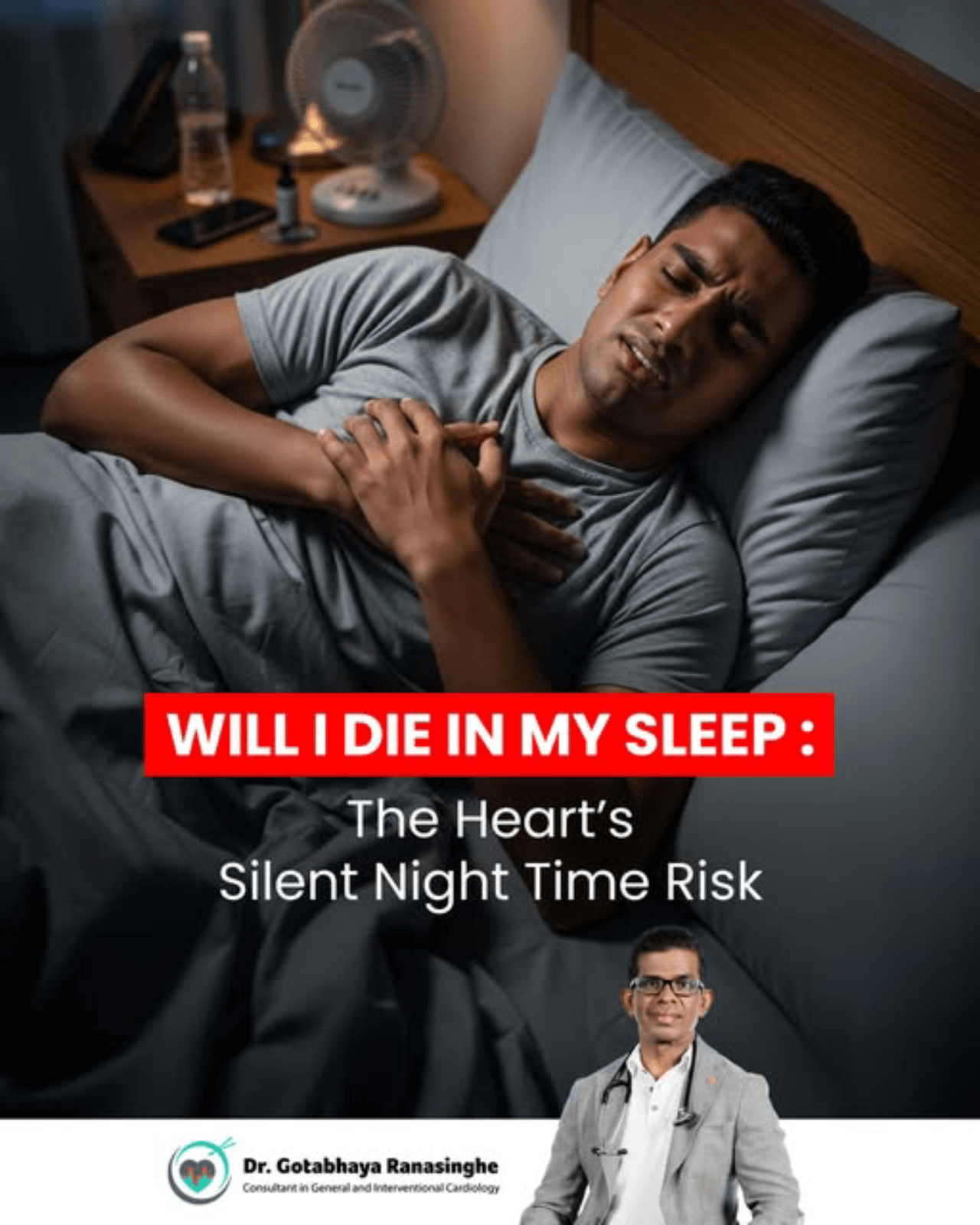
For most of us, sleep is the safest and most restorative part of life.
The heart slows, blood pressure falls, and the body begins its nightly repair. Yet, in rare circumstances, the night can conceal danger even for people who seemed fine the day before. Sudden cardiac events during sleep, though uncommon, have become an important topic in modern cardiology, especially with rising rates of hypertension, diabetes, obesity, and sleep disorders.
𝑾𝒉𝒂𝒕 𝑹𝒆𝒂𝒍𝒍𝒚 𝑯𝒂𝒑𝒑𝒆𝒏𝒔?
Sudden death during sleep is almost always due to the heart’s electrical system suddenly failing known as sudden cardiac arrest (SCA). This causes the heartbeat to stop abruptly, cutting off blood flow to the brain and vital organs. Without immediate CPR, the outcome is fatal.
Worldwide, sudden cardiac death accounts for 15–20% of all deaths, and many occur quietly, in bed.
But here is the key message: for most healthy people, sleep is safe. The risk is highest in those with underlying heart disease or untreated risk factors.
Why Can the Heart Fail at Night? Key Causes
𝟭. 𝗨𝗻𝗱𝗶𝗮𝗴𝗻𝗼𝘀𝗲𝗱 𝗛𝗲𝗮𝗿𝘁 𝗗𝗶𝘀𝗲𝗮𝘀𝗲
Coronary artery disease, previous silent heart attacks, and weakened heart muscle can set the stage for dangerous arrhythmias at night. Often, there may have been symptoms beforehand breathlessness, fatigue, chest tightness, or reduced exercise tolerance but they were dismissed as “stress” or “age.”
𝟮. 𝗢𝗯𝘀𝘁𝗿𝘂𝗰𝘁𝗶𝘃𝗲 𝗦𝗹𝗲𝗲𝗽 𝗔𝗽𝗻𝗲𝗮 (𝗢𝗦𝗔) 𝗧𝗵𝗲 𝗛𝗶𝗱𝗱𝗲𝗻 𝗧𝗿𝗶𝗴𝗴𝗲𝗿
A major yet silent contributor, especially in snorers.
In sleep apnea, breathing repeatedly stops, leading to:
• Drops in oxygen
• Surges in stress hormones
• Sudden changes in blood pressure
• Electrical instability in the heart
People with untreated moderate to severe OSA have nearly twice the risk of sudden cardiac death. Loud snoring, choking in sleep, morning headaches, and daytime sleepiness are key clues. CPAP treatment improves oxygenation, blood pressure, and rhythm stability.
𝟯. 𝗔𝗹𝗰𝗼𝗵𝗼𝗹 𝗕𝗲𝗳𝗼𝗿𝗲 𝗕𝗲𝗱
Night-time alcohol excess is a dangerous mix. It can:
• Trigger irregular rhythms (including atrial fibrillation)
• Worsen sleep apnea
• Depress breathing
• Cause low oxygen and arrhythmias overnight
Many “mysterious night-time deaths” after drinking are linked to these mechanisms.
𝟰. 𝗦𝗹𝗲𝗲𝗽𝗶𝗻𝗴 𝗣𝗶𝗹𝗹𝘀 & 𝗦𝗲𝗱𝗮𝘁𝗶𝘃𝗲𝘀
Used correctly, they can help certain patients. But overuse or combining sedatives with alcohol or sleep apnea is risky. They suppress breathing, reduce airway tone, and may trigger fatal rhythm disturbances in vulnerable individuals.
𝟱. 𝗨𝗻𝗰𝗼𝗻𝘁𝗿𝗼𝗹𝗹𝗲𝗱 𝗛𝗶𝗴𝗵 𝗕𝗹𝗼𝗼𝗱 𝗣𝗿𝗲𝘀𝘀𝘂𝗿𝗲
High blood pressure stiffens the heart and arteries. At night, changes in pressure can trigger:
• Silent heart attacks
• Fatal arrhythmias
• Strokes in sleep
Hypertension is one of the leading preventable causes of sudden death in Sri Lanka yet remains poorly controlled in the community.
𝟲. 𝗗𝗶𝗮𝗯𝗲𝘁𝗲𝘀 & “𝗗𝗲𝗮𝗱 𝗶𝗻 𝗕𝗲𝗱 𝗦𝘆𝗻𝗱𝗿𝗼𝗺𝗲”
Particularly in young individuals with type 1 diabetes, night time hypoglycaemia can cause dangerous heart rhythm disturbances. Proper sugar control and nighttime monitoring are crucial.
𝟳. 𝗚𝗲𝗻𝗲𝘁𝗶𝗰 𝗛𝗲𝗮𝗿𝘁 𝗥𝗵𝘆𝘁𝗵𝗺 𝗗𝗶𝘀𝗼𝗿𝗱𝗲𝗿𝘀
Uncommon but important, especially in young sudden deaths:
• Brugada syndrome (often male, events during sleep)
• Long QT syndrome
• Catecholaminergic polymorphic VT
Family history of sudden death or fainting episodes requires medical review.
𝟴. 𝗔𝗱𝘃𝗮𝗻𝗰𝗲𝗱 𝗛𝗲𝗮𝗿𝘁 𝗙𝗮𝗶𝗹𝘂𝗿𝗲
Weak heart muscle increases risk of dangerous arrhythmias, particularly during rest.
So, How Do You Protect Yourself?
Five Key Tips for Safe Sleep
For 99% of people, the answer is not fear it is prevention.
• Check and control blood pressure regularly
• Screen for sleep apnea if you snore or feel sleepy in daytime
• Avoid alcohol excess at night (especially paired with sedatives)
• Take diabetes medications properly and avoid night-time hypoglycaemia
• Use sleeping pills only when medically supervised
Also helpful:
• Maintain a healthy weight
• Exercise regularly
• Avoid late heavy meals and smoking
• Treat coronary artery disease early
• Learn CPR every household should know it
𝑹𝒆𝒂𝒔𝒔𝒖𝒓𝒂𝒏𝒄𝒆
Most people will never die suddenly in their sleep.
But for those with silent risk factors, awareness and early action can mean the difference between peaceful rest and tragedy.
Protect your heart during the day and it will protect your life during the night.