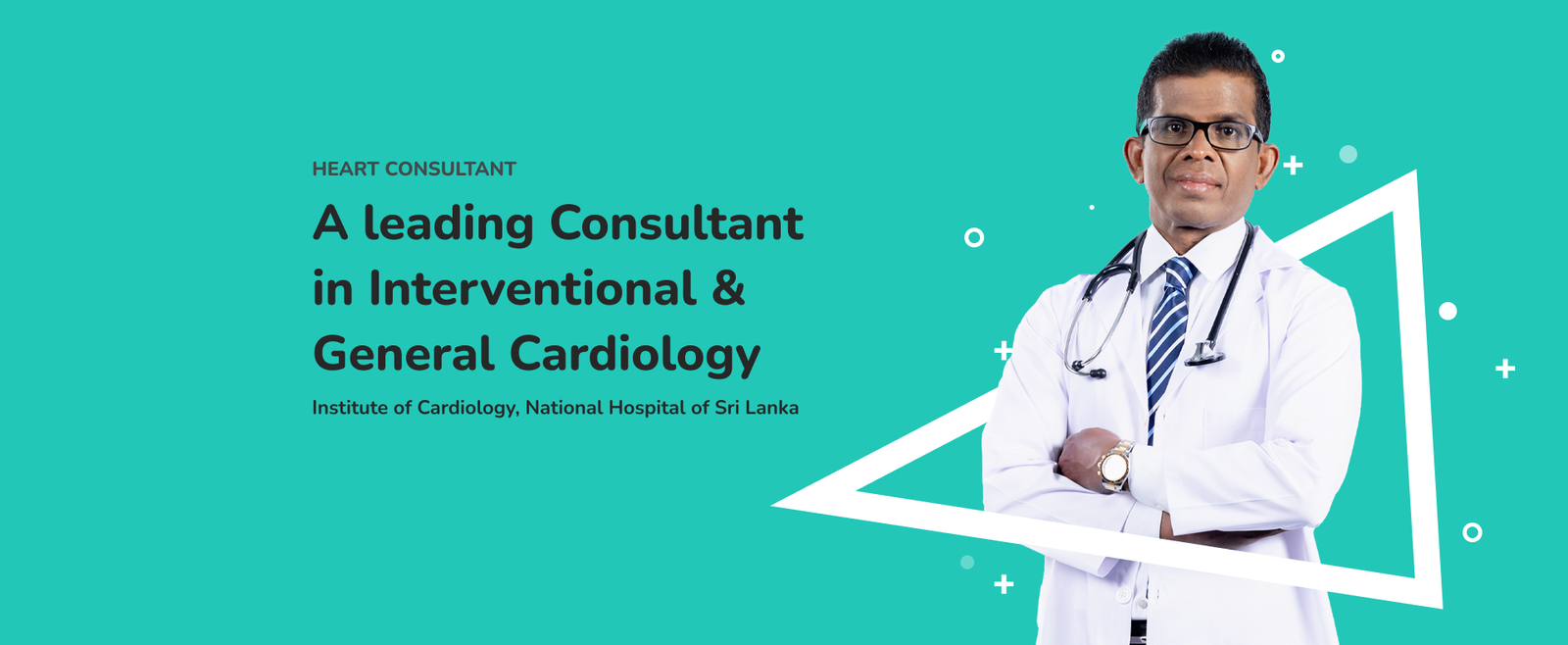
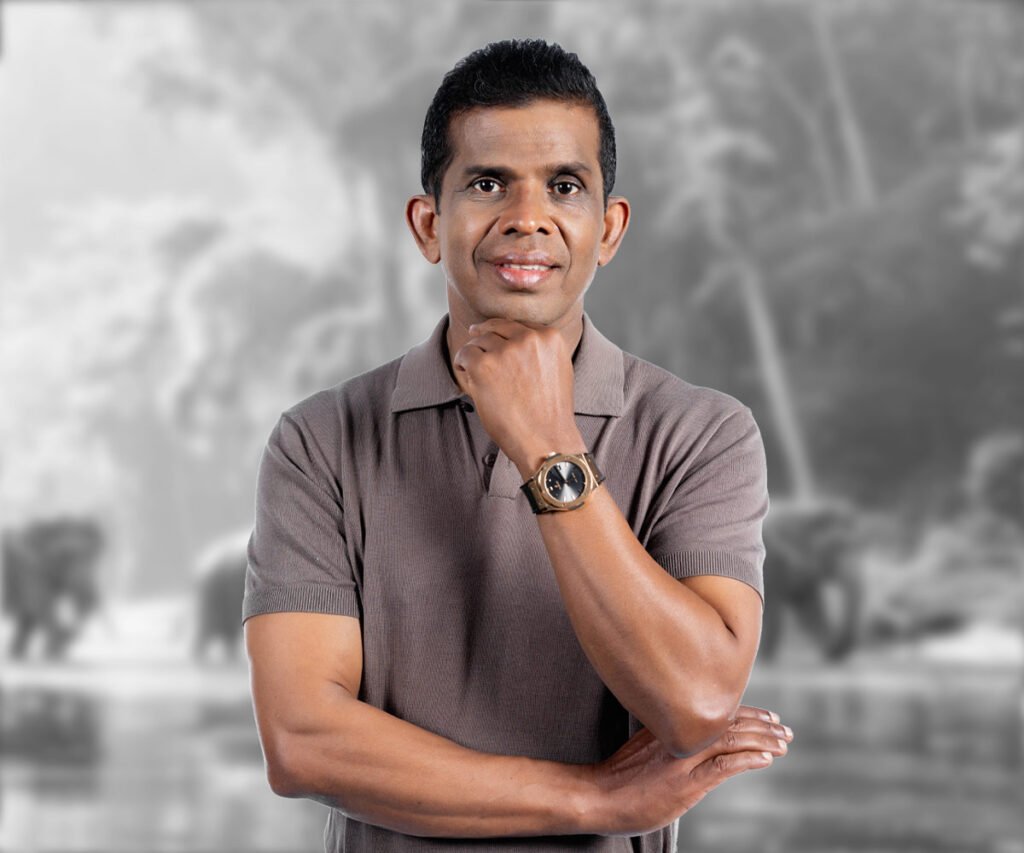
Leading General and Interventional Cardiologist in the Country
Dr. Gotabhaya Ranasinghe is a distinguished Sri Lankan Consultant Cardiologist and specialist in Interventional Cardiology, formerly serving as Senior Consultant Cardiologist at the National Hospital of Sri Lanka and President of the Sri Lanka College of Cardiology. He trained in cardiology at the prestigious John Radcliffe Hospital, Oxford, UK, and holds multiple international fellowships including FACC, FESC, FSCAI, FRCP, and FAPSIC.
He is the Founder of the Sri Lanka STEMI Forum, which pioneered Sri Lanka’s coordinated acute cardiac care system, and is internationally recognised for describing the novel vascular disorder SCADLE Syndrome. His research has been published in leading medical journals including The BMJ, The Lancet, JAMA, and the European Heart Journal.
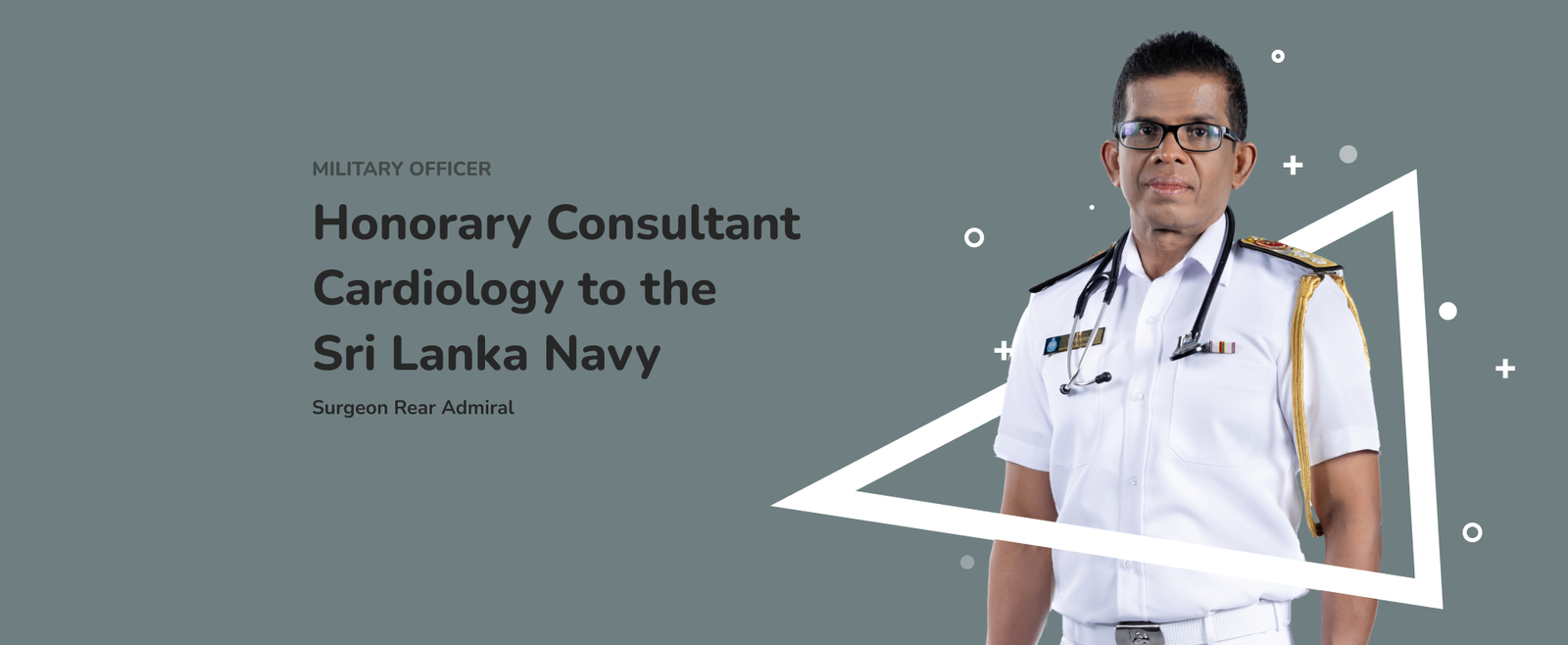
Dr. Ranasinghe also serves as Voluntary Consultant Cardiologist to the Sri Lanka Navy with the honorary rank of Rear Admiral, and is Senior Vice President & Brand Ambassador of the Lions Club of Colombo Ceylon Excellence. He is a recipient of the National APEX Award for Health and Medicine (2022) for outstanding contributions to science and medicine.
Heart Health Tips
Start a heart-health lifestyle
Put a halt to salt
Reducing the consumption of salt will reduce your blood pressure.
Say no to sugar
Reduce the consumption of sugar and sugary beverages/desserts.
Whole grain and red rice
Consume heart-healthy food.
Use healthy oils to cook
Use coconut oil when heating and frying. Olive oil is excellent for salads.
Eat a balanced diet at every meal.
Exercise at least 30 minutes per day.
Keep your self active.
Exercise at least 30 minutes per day.
SCADLE
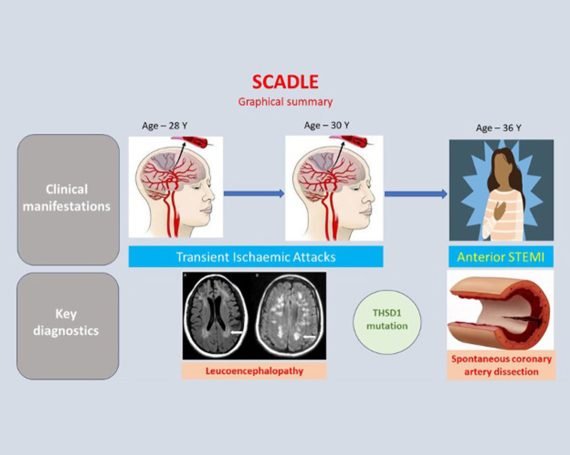
SPONTANEOUS CORONARY ARTERY DISSECTION WITH LEUCOENCEPHALOPATHY
Spontaneous coronary artery dissection (SCAD) is increasingly diagnosed as one of the infrequent causes of acute coronary syndrome. Almost no cause was identified in half of the cases. Here, we report a rare case of spontaneous coronary artery dissection with leucoencephalopathy (SCADLE) associated with a mutation of the thrombospondin Type 1 domain containing 1 (THSD1) gene.
Lead Author:
Dr. Gotabhaya Ranasinghe – Senior Consultant in General and Interventional Cardiology at the Institute of Cardiology, National Hospital of Sri Lanka
The Doctor’s many facets
Extraordinary perseverance makes things attainable!
Doctor
Consultant in Interventional and General Cardiology at the National Hospital, Colombo, and Honorary Consultant Cardiologist to the Sri Lanka Navy.
Fitness Enthusiast
Always pumped up and amped with a fitting cross-fit session.
Wildlife Photographer/ Nature Lover
Having your heart in the right place at the right time!
Latest Interventional Cardiology Advancements to Follow
New technologies for interventional cardiology include metallic intraluminal supports (stents), mechanical devices used for plaque removal (atherectomy), and photoablative devices (lasers). Several individual devices in each category are in active clinical investigation and appear to provide safe and effective treatment for many problems that have continued to plague conventional balloon angioplasty. These include failure to dilate eccentric, rigid, or diffuse stenoses; abrupt closure of the dilated segment; and restenosis after successful dilatation. Working with these devices, physicians have learned not only how to use them optimally but a great deal about the biology of restenosis and the manner in which new interventional devices should be evaluated. Although none of the new technologies is likely to replace balloon angioplasty, which has demonstrated broad applicability, success, and safety, the selective use of new devices seems certain to enhance the possibilities for percutaneous transluminal revascularization.
Robotic Technologies in Interventional Cardiology
Drug-Eluting Stents For Interventional Cardiology
Coronary Guidewires For Interventional Cardiology
Navigational Sensors in Interventional Cardiology
Vascular Closure Devices For Interventional Cardiology