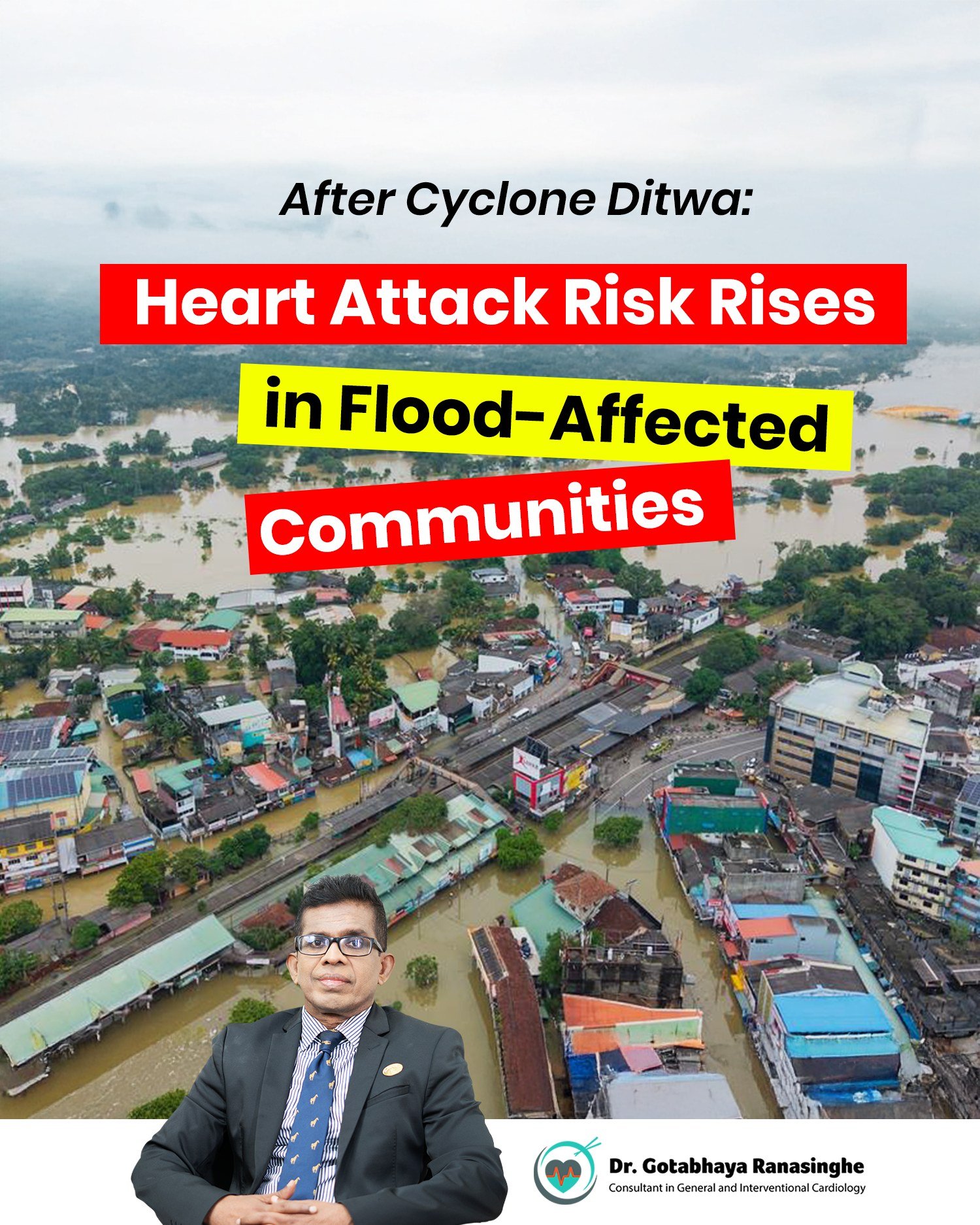
Heart Attacks After Cyclone Ditwa? Here’s Why Risk Is Rising in Flood Affected Communities
As Sri Lanka begins to recover from the devastation of Cyclone Ditwa, thousands remain displaced and while rebuilding homes, another silent danger emerges:
👉 A surge in heart attacks and cardiovascular emergencies.
Here’s what you need to know to protect yourself and your loved ones. 👇
💔 Why Do Heart Risks Rise After a Disaster?
International studies show that heart attacks can rise by 40–50% following natural disasters. Floods, displacement, and emotional trauma put serious strain on the heart.
What triggers this?
🔥 High Stress = High Heart Strain
● Adrenaline surges
● Blood pressure increases
● Heart rate accelerates
● Plaque may rupture → Heart attack
😴 Poor Sleep & Exhaustion
Crowded shelters and anxiety make quality sleep rare.
Sleep deprivation increases inflammation and disrupts heart function.
💊 Interrupted Medication
Access to regular medicines is often lost.
Stopping your:
● Blood pressure pills
● Diabetes medication
● Cholesterol tablets
● Aspirin or Clopidogrel
● Blood thinners (like Warfarin)
even for a few days, can be life threatening.
🍛 Irregular or Unbalanced Meals
Emergency food may be high in salt, sugar, or lacking key nutrients worsening sugar control, blood pressure, and fluid retention.
🚬 Coping with Smoking & Alcohol
Many turn to smoking or drinking to deal with stress but both significantly increase the risk of heart attacks and arrhythmias.
⚠ Who’s Most at Risk?
Pay special attention if you are:
● A heart attack survivor
● Living with high blood pressure or diabetes
● Elderly
● A regular smoker
● Under emotional or physical stress
● Living with kidney disease
🚨 Know These Heart Attack Warning Signs
If you experience any of the following seek help immediately:
● Chest pain, pressure, or tightness
● Shortness of breath
● Pain in the jaw, neck, arm, or back
● Sudden nausea, sweating, or dizziness
● Palpitations or irregular heartbeat
● Swollen legs or trouble breathing when lying down
👉 Don’t wait. Don’t self-treat. Every minute counts.
❤️ How to Protect Your Heart During the Crisis
1️. Continue All Medications
Keep them dry and safe. Replace immediately if lost.
Never stop BP meds, diabetes pills, aspirin, or blood thinners without medical advice.
2️. Prioritise Sleep and Rest
Even short naps help reduce cardiac strain.
3️. Avoid Smoking and Alcohol
They increase blood pressure and cardiac risk under stress.
4️. Stay Hydrated
Drink safe water regularly to avoid dehydration.
5️. Seek Medical Help Early
Visit your nearest:
● Hospital
● Medical camp
● MOH clinic
Ask for an ECG if you feel chest discomfort, dizziness, or palpitations.
🚑 Emergency Support
📞 Suwa Seriya Ambulance Service (24/7): 1990
📞 Sri Lanka STEMI Forum Hotline: +94 76 317 7312
For any questions about chest pain, medications, or symptoms don’t hesitate to reach out.
💬 Please Remember
Disasters test more than our homes they test our hearts.
Stay informed. Stay alert.
And please, take care of your heart and each other.