
𝗔 𝗠𝗶𝗱𝗻𝗶𝗴𝗵𝘁 𝗩𝗶𝗴𝗶𝗹: 𝗧𝗵𝗲 𝗖𝗵𝗮𝗻𝗴𝗶𝗻𝗴 𝗣𝘂𝗹𝘀𝗲 𝗼𝗳 𝗢𝘂𝗿 𝗪𝗮𝗿𝗱𝘀
I still remember the days when I used to do midnight ward rounds in the National Hospital Colombo. Walking through crowded wards late at night, seeing rows of patients under dim fluorescent lights, one thing became increasingly clear over the years, 𝗵𝗲𝗮𝗿𝘁 𝗱𝗶𝘀𝗲𝗮𝘀𝗲 𝗶𝗻 𝗦𝗿𝗶 𝗟𝗮𝗻𝗸𝗮 𝘄𝗮𝘀 𝗰𝗵𝗮𝗻𝗴𝗶𝗻𝗴 𝗿𝗮𝗽𝗶𝗱𝗹𝘆.
When I first began practicing medicine, serious cardiac disease was seen mostly among older patients. Today, we increasingly see men and women in their thirties and forties arriving with heart attacks, heart failure, and dangerous rhythm disturbances. Many are young parents and the sole breadwinners of their families.
Traditionally, we depended mainly on clinical examination, ECGs, and experience to make urgent decisions. But over time, technology began to play a larger role in helping doctors identify dangerous cardiac conditions earlier and more accurately.
What once sounded futuristic is now slowly becoming part of everyday cardiac care, even in busy government hospitals.
𝗧𝗵𝗲 𝗖𝗿𝗶𝘀𝗶𝘀 𝗮𝘁 𝗢𝘂𝗿 𝗗𝗼𝗼𝗿𝘀𝘁𝗲𝗽: 𝗪𝗵𝘆 𝘁𝗵𝗲 𝗢𝗹𝗱 𝗪𝗮𝘆𝘀 𝗔𝗿𝗲 𝗡𝗼𝘁 𝗘𝗻𝗼𝘂𝗴𝗵
The reasons behind this growing cardiac burden are not difficult to understand. Over the years, our lifestyles have changed significantly. Long working hours, chronic stress, unhealthy dietary habits, lack of exercise, smoking, diabetes, and hypertension have all contributed to this rise in cardiovascular disease.
In many patients, these conditions remain silent for years until a major cardiac event suddenly occurs.
One of the greatest challenges in Sri Lanka has always been 𝘁𝗶𝗺𝗲.
In cardiology, early diagnosis and treatment are critical. Minutes can make the difference between recovery and permanent damage to the heart muscle. Yet in overcrowded hospitals and peripheral healthcare settings, delays are often unavoidable.
Patients living in rural areas may spend hours travelling before reaching a center with specialist cardiac facilities. By the time they arrive, valuable opportunities for early intervention may already have been lost.
This is where modern technology is beginning to change the landscape of cardiac care.
𝗧𝗵𝗲 𝗦𝘂𝗽𝗲𝗿-𝗦𝘁𝗲𝘁𝗵𝗼𝘀𝗰𝗼𝗽𝗲: 𝗔𝗜 𝗮𝘀 𝘁𝗵𝗲 𝗖𝗼𝗻𝘀𝘂𝗹𝘁𝗮𝗻𝘁 𝗪𝗵𝗼 𝗡𝗲𝘃𝗲𝗿 𝗦𝗹𝗲𝗲𝗽𝘀
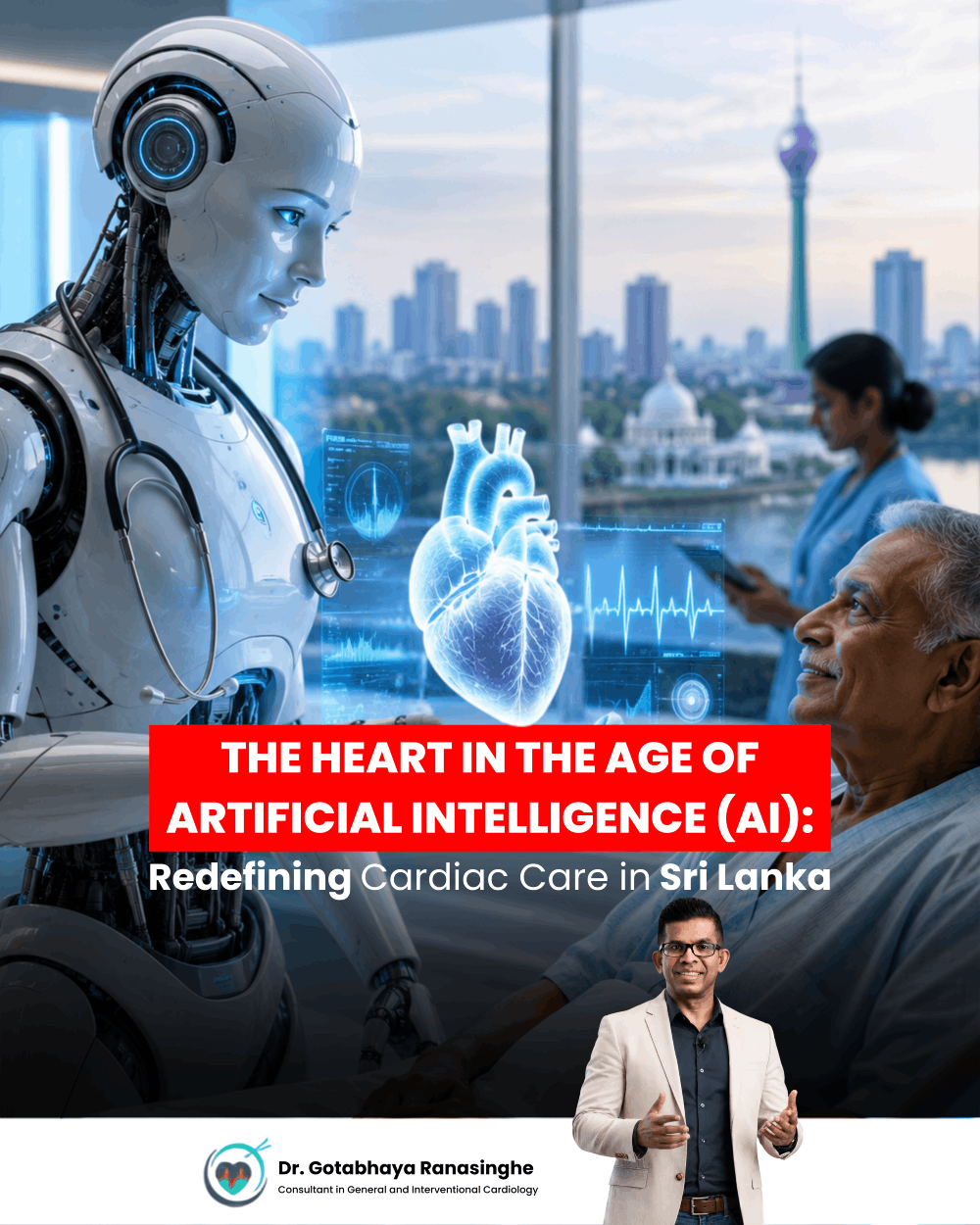
Artificial intelligence and digital diagnostic systems are no longer concepts limited to international conferences or advanced research centers. They are gradually becoming practical tools that support doctors in everyday clinical work.
These systems can analyze ECGs, identify subtle abnormalities, and help detect potentially life-threatening conditions earlier than before. For doctors working in busy emergency units or remote hospitals, this support can be extremely valuable.
After long hours on duty, interpreting a difficult ECG accurately is not always easy.
AI-assisted systems can help identify patterns suggestive of heart attacks, dangerous arrhythmias, or early cardiac dysfunction that may otherwise be overlooked during a hectic shift.
𝗖𝗿𝘂𝗰𝗶𝗮𝗹𝗹𝘆, 𝘁𝗵𝗶𝘀 𝘁𝗲𝗰𝗵𝗻𝗼𝗹𝗼𝗴𝘆 𝗶𝘀 𝗻𝗼𝘁 𝗿𝗲𝗽𝗹𝗮𝗰𝗶𝗻𝗴 𝗱𝗼𝗰𝘁𝗼𝗿𝘀. 𝗜𝘁 𝗶𝘀 𝗮𝘀𝘀𝗶𝘀𝘁𝗶𝗻𝗴 𝘁𝗵𝗲𝗺.
In fact, technology is already moving beyond hospital-based monitoring systems. Today, compact digital devices are being developed that allow patients to record their own ECGs and basic cardiac data from home using small portable gadgets and wearable devices.
These recordings can then be transmitted directly through digital platforms to nearby clinics, care centers, or doctors for rapid review and advice.
I recently saw several of these systems being demonstrated at one of the international conferences held in Europe, EuroPCR, and some are already being used in parts of India and other countries.
The potential impact of this approach is significant, particularly for countries like Sri Lanka, where access to specialist cardiac services can be limited outside major cities.
Early detection, faster communication, and remote interpretation may help patients receive timely medical attention long before they become critically ill.
Clinical judgement, experience, and patient interaction remain at the center of medical care. However, technology can provide an additional layer of support, particularly in healthcare systems where resources and specialist access are limited.
𝗧𝗵𝗲 ‘𝗔𝘁𝗵𝗲 𝗚𝘂𝗻𝗮’ 𝗮𝗻𝗱 𝘁𝗵𝗲 𝗔𝗹𝗴𝗼𝗿𝗶𝘁𝗵𝗺: 𝗔 𝗛𝘂𝗺𝗮𝗻-𝗖𝗲𝗻𝘁𝗲𝗿𝗲𝗱 𝗙𝘂𝘁𝘂𝗿𝗲
At the same time, we must remember an important truth: 𝗺𝗲𝗱𝗶𝗰𝗶𝗻𝗲 𝗶𝘀 𝗻𝗼𝘁 𝗽𝗿𝗮𝗰𝘁𝗶𝗰𝗲𝗱 𝗯𝘆 𝗮𝗹𝗴𝗼𝗿𝗶𝘁𝗵𝗺𝘀 𝗮𝗹𝗼𝗻𝗲.
Technology can analyze data rapidly and identify patterns with impressive accuracy. But patients do not come to hospitals seeking technology alone. They come seeking reassurance, trust, compassion, and human understanding during some of the most vulnerable moments of their lives.
In Sri Lanka, we often speak about “Athe Guna”, the healing touch and the human connection between doctor and patient. That human element remains central to good medical care and always will.
No machine can replace the ability to comfort a frightened patient, speak honestly with a worried family member, or make difficult decisions guided by both science and empathy.

𝗘𝘃𝗲𝗿𝘆 𝗛𝗲𝗮𝗿𝘁𝗯𝗲𝗮𝘁 𝗠𝗮𝘁𝘁𝗲𝗿𝘀
The future of cardiac care in Sri Lanka will depend on achieving the right balance.
Artificial intelligence and digital medicine can strengthen our healthcare system, improve early diagnosis, and support overstretched medical professionals. But these advances must continue to work alongside the values that define good clinical care.
Predictive technologies and smarter monitoring systems may eventually allow us to identify high-risk patients earlier and intervene before serious disease develops.
For a country facing a growing burden of cardiovascular illness, prevention and early intervention will be essential.
Ultimately, technology is only a tool.
What matters most is how we use it to protect human life, reduce suffering, and improve access to care for all Sri Lankans.
𝗧𝗵𝗮𝘁 𝗶𝘀 𝘄𝗵𝗲𝗿𝗲 𝘁𝗵𝗲 𝗿𝗲𝗮𝗹 𝗳𝘂𝘁𝘂𝗿𝗲 𝗼𝗳 𝗺𝗲𝗱𝗶𝗰𝗶𝗻𝗲 𝗹𝗶𝗲𝘀.